Health and Safety Policy for Cleaners Barnes
 Our health and safety policy sets out the standards and responsibilities that support safe, reliable, and consistent cleaning services. For Cleaners Barnes, this means creating a working environment where hazards are identified early, risks are reduced, and every task is completed with care. We believe that a safe workplace is essential to quality service, staff wellbeing, and responsible operations.
All cleaning activities must be planned and carried out with attention to safety. This includes the correct use of cleaning products, suitable equipment, and appropriate personal protective equipment where required. Employees must follow safe systems of work, report unsafe conditions, and avoid shortcuts that could place themselves or others at risk. Our approach to safe cleaning practice is based on prevention, training, and accountability.
 Risk assessment is an important part of our policy. Before any job begins, potential hazards should be considered, including slippery floors, electrical equipment, chemical exposure, manual handling, and interaction with the public or building users. The results of these assessments help us decide on control measures that protect both staff and property. Cleaning services in Barnes must remain adaptable, but safety standards should never be lowered for convenience or speed.
Responsibilities and Safe Working Standards
Managers and supervisors are responsible for providing clear instructions, suitable equipment, and regular oversight. They must ensure that workers understand the risks linked to each task and are trained to use materials correctly. Cleaner safety policy requirements include correct storage of chemicals, safe lifting techniques, and routine checks on tools and machinery. If equipment is damaged or unsuitable, it should be removed from use immediately.
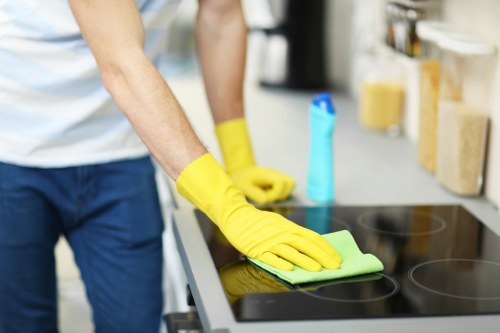
Employees have a duty to take reasonable care of themselves and others. They should wear the correct protective clothing, keep work areas tidy, and use warning signs where floors may be wet or otherwise hazardous. Any incident, near miss, or unsafe condition must be reported without delay. This helps prevent repetition and supports continuous improvement in professional cleaning standards.
 In the middle of our operations, communication plays a key role. Team members should understand who to speak to if they encounter a problem, need additional equipment, or feel that a task cannot be completed safely. No one should feel pressured to continue work if conditions are unsafe. By encouraging openness, the health and safety policy for cleaners remains practical rather than purely administrative.
Chemicals, Equipment, and Manual Handling
Cleaning products must be labelled clearly and used according to instructions. Never mix chemicals unless it is explicitly safe to do so, and always ensure that containers are stored securely after use. Where possible, lower-risk products should be selected. Proper ventilation should be maintained during use, especially in enclosed areas. These measures reduce exposure and support safer commercial cleaning procedures.
Equipment such as vacuums, floor machines, and extension tools should be checked before and after use. Any faults must be reported, and unsafe items must not be used until repaired or replaced. Cables should be managed carefully to prevent tripping hazards, and powered equipment should be used only by trained personnel. Good maintenance habits are central to a strong cleaning safety policy.
Manual handling is another important concern. Staff should assess the weight, shape, and distance involved before lifting or moving items. Where needed, assistance or mechanical aids should be used. Repeated awkward movements should be avoided, and tasks should be organised to reduce strain. A sensible approach to handling supports long-term wellbeing and lowers the chance of injury in domestic and contract cleaning.
Training, supervision, and review are essential to keeping this policy effective. New employees must receive induction covering key risks, emergency procedures, and correct working methods. Refresher training should be provided when procedures change or when new equipment is introduced. Supervisors should observe work practices and correct unsafe habits promptly, helping to maintain a consistent safe cleaner policy.
 Emergency readiness is also part of good health and safety management. Staff should know how to respond to spills, breakages, injuries, fire alarms, and other urgent situations. First-aid arrangements must be understood, and escape routes should remain clear at all times. A calm, informed response can reduce harm and limit disruption during unexpected events.
We also recognise the importance of wellbeing. Cleaning work can be physically demanding and may involve repetitive tasks, time pressure, or varied environments. Reasonable planning, adequate breaks, and realistic workloads help reduce fatigue. When employees feel supported, they are more likely to follow procedures carefully and maintain high standards across every assignment. This reflects the values of responsible cleaning services.
Monitoring and review ensure that the policy remains current and effective. Incidents, complaints, equipment failures, and audit findings should be reviewed to identify patterns and improvements. Where necessary, procedures must be updated so that lessons are learned and future risks are reduced. A strong policy is not static; it evolves with working conditions and best practice.
 This health and safety policy applies to all cleaning work carried out under our care, whether routine or specialist. Everyone involved is expected to support it, follow it, and contribute to safer working methods. By promoting clear responsibility, practical controls, and ongoing review, Cleaners Barnes can deliver a dependable service while protecting people, property, and standards.
Policy commitment: we are committed to maintaining a safe, well-managed environment through proper training, careful supervision, and continual improvement. Safety is an essential part of service quality, and every cleaner plays a role in upholding it.